

Journal / Guide
Planning Your Kitchen Renovation: What to Bring to the First Conversation
A kitchen renovation starts with how you want to live in the room. Perhaps two people cannot cook comfortably at the same time. The counters collect everything because storage is limited. Or the kitchen feels separated from the family room where everyone gathers.
Before choosing a cabinet color, write down what you want to change about those everyday moments. For Kansas City homeowners preparing for a kitchen remodel, that simple step gives the first conversation a useful starting point.
You do not need a finished design or every fixture selected before reaching out. Here is what helps.
1. Describe what is not working
Walk through a normal morning, a weeknight dinner, and a gathering with friends. Where does the room get in your way?
- Is there enough preparation space near the sink and range?
- Can someone open the dishwasher while another person moves through the kitchen?
- Which items never seem to have a convenient place?
- Is the lighting useful where you actually work?
- Do you want seating for everyday meals, conversation, or both?
Be specific. “We need a better kitchen” leaves many possibilities open. “We need a place for the kids to sit without blocking the cooking area” explains the problem a design needs to solve.
2. Separate your must-haves from your preferences
Create two short lists. The first should hold the changes that would make the renovation worthwhile. The second can include details you would enjoy if they fit the overall plan.
A must-have might be more usable storage or replacing worn cabinetry. A preference might be a particular backsplash pattern or a second oven. There is no universal right order. The point is to make your own priorities clear before comparing options.
If more than one person makes decisions for the household, compare your lists together. Finding differences early is much easier than discovering them after selections are underway.
3. Gather photos and explain what you like
Take a few photos of your existing kitchen from different angles, including adjacent rooms. Note which appliances you plan to keep and any known issues you want to discuss. Photos help explain the space, but they do not replace an assessment of the home.
Bring a small set of inspiration images, too. For each one, identify the detail that matters: the cabinet finish, the warmth of the wood, the island seating, or the way the lighting feels. A photo may show a room with very different dimensions from yours, so use it to communicate preferences rather than as a plan to copy.
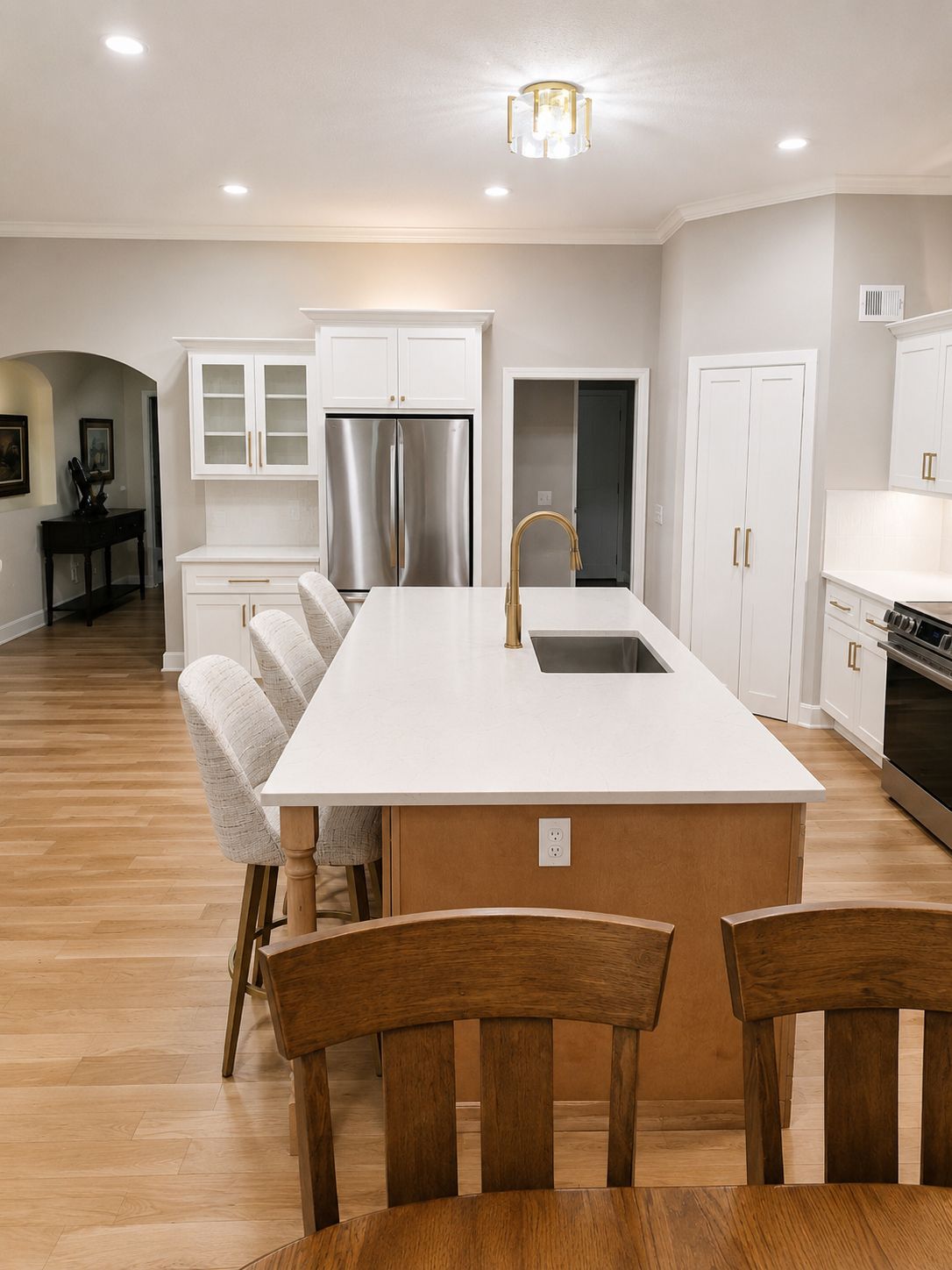
The completed Raymore kitchen pictured above is one example of our work. You can also explore our kitchen renovation services as you collect ideas.
4. Be clear about layout and materials
Keeping a layout and changing a layout are different scopes of work. Tell your builder whether you are open to moving the sink, changing appliance locations, or opening the kitchen to an adjoining room. Those ideas need to be evaluated against the home’s existing conditions.
Material preferences matter as well. Cabinet construction, countertop selection, flooring, lighting, and appliances all affect the scope. You do not need to resolve every choice now. It helps to say which decisions are already firm and where you would like guidance.
For more context, read our guide to what drives kitchen remodeling costs.
5. Share your investment range and timing constraints
A comfortable investment range helps frame a practical conversation about priorities. If you are still working through that range, say so. It is better to discuss the uncertainty than to build a plan around an assumption.
Mention travel, family events, or other circumstances that could affect construction. Ask how planning, selections, ordering, and work in the home fit together. A desired completion date is useful context, but it should not be treated as a promise before the scope and schedule are established.
Also discuss daily life during the renovation: access through the home, pets, work-from-home needs, and how you might manage meals while the kitchen is unavailable.
6. Ask what happens next
Before the conversation ends, make sure you understand the next step. Useful questions include:
- What needs to be evaluated at the home before the scope can be defined?
- Which selections need to be made before pricing or scheduling can be finalized?
- What is included in the proposed work, and what is excluded?
- How will questions and changes be communicated?
- Who should be involved in decisions as the project moves forward?
At Resurrection Homes, we do not provide online estimates. A form submission helps us understand what you have in mind; a meaningful estimate requires a closer understanding of your home, the work, and the materials involved.
If you are considering a kitchen renovation in the Kansas City metro, tell us what is working, what is not, and what you hope the room can become. You do not need every answer to start a thoughtful conversation.
Questions, answered
Do I need to choose all my kitchen finishes before contacting a builder?
No. Start with how you want the kitchen to work, your priorities, and a few examples of the look you like. Specific materials and selections can be discussed as the scope becomes clearer.
What should I bring to a kitchen renovation conversation?
Bring photos of your current kitchen, a short list of what is not working, your must-haves, a comfortable investment range, and any timing constraints. Note any appliances you want to keep or replace.
Can Resurrection Homes provide an online kitchen estimate?
We do not provide online estimates. Each kitchen has different conditions, layout needs, and material choices. Sharing your goals starts the conversation; pricing requires a closer understanding of your home and the proposed work.
Planning a renovation of your own?
Tell us about your project and we will be glad to talk it through with you.
Thank you. Your inquiry has been received.
We will be in touch shortly. If you need us sooner, call (816) 318-7109.